Percentage of Joseph’s changes to John’s writings

Taken from The Testimony of John the Beloved:  The 27th Annual Sidney B. Sperry Symposium (Deseret Book Company, 1998) . . .

Jonn D. Claybaugh writes, “The Reorganized Church of Jesus Christ of Latter Day Saints has published Joseph Smith’s “New Translation” of the Bible (Independence, Mo.:  Herald Publishing House, 1970), which is a side-by-side comparison of Joseph Smith’s inspired revision of the Bible (the Joseph Smith Translation, or JST) and the King James Version.  It shows that Joseph made changes in every book of the New Testament, except 2 John and 3 John.  By simply counting the verses that are changed in the Joseph Smith Translation, I learned the following:  of the 879 verses in the Gospel of John, 238 are changed, or 27 percent; of the 105 verses in I John, sixteen are changed, or 15 percent; of the 404 verses in Revelation, 83 are changed, or 21 percent.  Overall, of the 1,415 New Testament verses written by John, 337 are changed, or 24 percent” (pp. 34-35, n. 18).

 What I would like to do in future months is explore all the JST changes in John’s Gospel and try to understand why.  It is crucial that my exegesis every Sunday morning before God’s people be faithful to the text.  It is imperative that I study the flow of words in the Greek MSS to see if major changes are authorized by the Holy Spirit to the English text.

 Fair enough, friends?

Defining the Word


Last year, a friend, Mike Sproul published these words, “Reading an original KJV 1611 is nearly impossible for a twenty-first century American. Reading Wycliffe or Tyndale is nearly impossible. Thomas Nelson has now published a book [King James Book (Nashville, TN: Thomas Nelson, 1994) byRonad Bridges and Luther A. Weigle] that lists hundreds of archaic words and phrases in the OKJV. This book will surprise readers with the numerous phrases in the OKJV that they thought they understood, but really did not. For example, I have been reared to listen to the KJV, memorize the KJV, preach from the KJV, and earned a B.A, M.Div., and D. Min., in schools that only use the KJV; yet I did not know the meaning of certain words in my translation. If I did not know these idiomatic expressions of archaic words, how could the modern ‘ploughboy’ know them?”[1]


I laughed because of my similar background to Sproul, minus the Doctor of Ministry; yet regarding his observation, I agree wholeheartedly. Skeptical? Then take the test. As a sampling from a larger pot, define the following thirty two words: affording, ague, alamoth, amerce, beeves, besom, blains, bolled, broided, bruit, caul, cauls, chamois, collop, cotes, draught house, earing, flowers (her), fuller, habergeon, hough, maw, mincing, muffler, ouches, parbar, polled, selvedge, sith, wen, wimples, and withs. Perhaps you have read the King James Version all your life; but if you miss the accurate meaning of nineteen of these words, you flunk the test. And if it is any comfort, I felt myself reduced to a religious acolyte.


There have been plans offered to those confused by archaic words and yet restricted in their consciences to consult modern-day Bible translations. One modus operandi among certain folks in the King James Version Only (KJVO) community has been little dictionary supplements to be tucked right inside the cover of their KJV Bibles. I remember an independent Baptist pastor in my region of the country handing out “The King James Bible Companion” (over 500 archaic words defined) by David W. Daniels. Chick Publications [2] in
Ontario, California wrote on the back of the little booklet, “Rather than taking the time to learn the definitions of archaic King James words, many Christians simply buy a modern version of the Bible. This is a big mistake.” David has a motto: “It takes only a single generation to make a word archaic . . . and a single generation of Bible readers can bring it back into use.”


Paul Chappell recommended in one of his email devotions (April 26, 2006), “Take a dictionary in one hand, and a concordance in the other, and dig into the Word of God.” Amen. But I also recommend to the people in serious study to have two more things on the table – a good interlinear encompassing both the Old and the New Testaments and several other Bible translations. [3] With that as a basis, it then becomes a profitable exercise to read and discern what people write in Bible paraphrases, Bible stories, and most of all, Bible sermons.


Saying all this in the introduction, what seems to be the solution for getting the whole new generation of LDS young people to read their KJV Bibles? Most would cry they are not scriptorians. Biblical illiteracy is epidemic. With ipods, laptops, and booming LDS movie media, how interested are the young people of generation x, y, and z in sitting down and wading through the thee’s and thou’s of the major and minor prophets? I am really surprised when Dr. Kent P. Jackson, professor of ancient scripture at BYU-Utah, suggests the helpfulness of modern translations [4] when reading Isaiah. Doesn’t this create conflict or uneasy tension within the LDS community? (more…)

Kool-Aid and Fundamentalism

To my LDS readers, the SI administration just posted my book review of Lauren Sandler’s new book, Righteous on SharperIron.  Lauren wrote a whole chapter about Mark Driscoll’s church in Seattle.  In fact, chapter 2, of her book became very controversial among bloggers.  Therefore I believe, Lauren allowed the entirety of chapter 2 to be accessed on Salon, where she is an editor.

But this is what I find interesting.  Weeks ago, an LDS blogger named Dave, who has been very courteous to me, wrote a short article about the evangelical cult of personality.  In the thread, LDS blogger Naiah Earhart responded at the very close of her post (#23), “These people are being fed Kool-Aid.”

Guess where Naiah is living?  Seattle.  I wonder if she has been influenced by Lauren Sandler who uses those very words, “Kool-Aid” in chapter 2.

Dave has since closed his article for comment.  I don’t blame him.  But the topic is a worthy one to discuss.  In fact, I told Dave in the thread of his article, I would consider typing out a few thoughts that address the focus of both LDS and evangelicals.  It is in the works.  Nothing big.  But just a few thoughts for consideration.

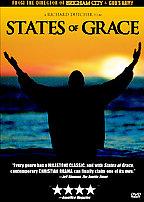
States of Grace

581158_thumb1.jpgRichard Dutcher with Zions Production has just recently directed an LDS box-office hit, States of Grace. Michael Medved praises the film as “an exceptionally skillful and superbly acted piece of work . . . A VERY MOVING FILM!” Jeff Vice excitedly shouts, “ONE OF THE TOP TEN FILMS OF THE YEAR!” Jeff Shannon of The Seattle Times writes, Every genre has a MILESTONE CLASSIC, and with States of Grace, contemporary CHRISTIAN DRAMA can finally claim one of its own.”

Once again, Richard Dutcher, spending just under a million dollars, crafts for the mainstream public a riveting story, stretching the boundaries of the stereotypical Mormon fanfare. He is a meticulous cinema weaver of Mormon spirituality, taunt emotion, and unsuspecting turns. Dutcher explores the complexity of individual characters, while not in the least bit afraid (at least what I detect) to strip away the sugar-coated, protective layers so obnoxious in most LDS multi-media. A typical Mormon flick might be as fluffy as the foam of a root beer float, but Richard’s stories dare me to ask scores of heart questions. Yet showing restraint, I will only pose a dozen or so.

The young LDS elders in Dutcher’s two films, States of Grace, and his previous movie, God’s Army, live wild adventures in the concrete jungles of L.A., which causes me to wonder what the missionaries assigned to southeastern Idaho or Utah think? Here in Ammon, Idaho, the men walk hum-drum along farm fields and dine atArctic Circle. In nearby Shelley, the men are celebrities at the annual spud fest, battling locals in fun tug-a-wars over a huge, mashed potato pit. Sorry about the lack of Hollywood glamour here in Mormon country. No beaches. No girls in bikinis. No drive by shootings with gang bangers. No unbelievable stories of baptisms in oceans. Just lots of warm, religious fuzzies. LDS concerts. Home evenings. Singles’ wards. And many kind LDS grandpas and grandmas. The biggest challenge for elders in southeastern
Idaho is igniting a new spark among the all too common familiarity. No wonder we normally get the missionaries from far off places. The noticeable social and racial change in the demographics of southeastern Idaho and Utah are the missionaries – a complete dissimilarity to California. (But I will say this about the movie—the people of Ammon, Idaho will like the discussion over Ammon in the Book of Mormon between the actors, “elder Banks” and Carl in the movie. Only “Carl” wouldn’t find many blacks in Ammon, Idaho except the
Church of
God bishop, some of the church family, and a few others.)

States of Grace swirl around two LDS elders—“Lozano”, a tattooed Hispanic, converted from a hard-core gang by an earlier Idaho missionary (Tubbs, I believe) as they lay all busted up in a hospital, and also, “Farrell”, a typical, loveable white boy from Midvale in the Salt Lake area. Three other characters enter the drama to make things distinct and colorful: a homeless, street preacher named Lewis who had disgraced himself because of his “weakness for women”; Holly, a young actress who had wretchedly fallen into some porn auditions to financially survive; and Carl, a big, tough, black gangster, living a life of vengeance through bloodshed.


In typical Dutcher fashion, the suspense takes place immediately, Carl and some of his homies run into the two Mormon boys on a street corner. Religious slurs tumble out – “John the Baptist white boy! Jesus freak!” Things really shutter, spin, and explode out of control when a car loaded with a neighboring gang screeches to a stop in the street. One guy starts unloading full clips of his semi-automatic into the crowd.


This event becomes the salvation of Lozano’s sense of worth in his mission. Missionary discouragement over unfulfilled expectations had him counting the last days for when he was heading home. In front of all his other missionary peers, he wistfully declared his post-mission adventure, “The day after Christmas, I am going to borrow my mother’s car; I am driving out into the desert for two weeks, Dixie Chicks and me . . . rent 42 movies, three for each day . . . stay up till 3:00 in the morning . . . kiss my girlfriend on the lips a 100 times a day, the rest of my life.”

Heart question number 1: Is it religious experience that sustains the heart of a young LDS elder on a mission?

Dutcher introduces the black, homeless man, Lewis, into the movie as a fun-loving, Pentecostal preacher standing on a sidewalk retaining ledge, proclaiming in a loud voice to all the pedestrians walking pass him: “In the beginning God created the heavens and the earth, book of Genesis, chapter 1 verse 1 . . . verse 2, I can tell you all about it brothers and sisters, all about it . . . One Bible, two testaments, 58 books, 11 epistles, and then the glorious book of Revelation, the glorious book of Revelation!”


Things go bad for the fellow. The missionaries find him, terribly sick, lying on some cardboard near a trash dumpster. Farrell would rather leave the guy, but Lozano asks the famed, evangelical question, “What Would Jesus Do?” Like the good Samaritan, he directs his partner, “Grab the feet of this homeless preacher and give him a bed in our room.”


Lozano, Farell, and the neighborhood girl, Holly, end up helping get this guy back up on his feet to the point that when they later fall in moral crises, desperately in need of help, he is the one there for them. Dutcher later films the Pentecostal preacher praying for the LDS missionary, Farell, all torn up emotionally. A matter of fact, as a Baptist minister, I am praying for some of the young, vulnerable LDS missionaries, too. It’s just that I have never seen a Pentecostal preacher dress up in “elder clothes” complete with badge and actually read the Book of Mormon loudly in public places. Have you?


In one night time scene, while Lewis is sleeping in one of the missionary’s beds, Lozano is kneeling in repentant prayer. His buddy asks him what he is doing; and he shoots back, “Don’t die with any sins on your head!”

Heart question number 2: What if this does happen? God does demand perfect righteousness. And remember, every sin is an eternal offence because of the transgression against an eternal, holy God.

Heart question number 3: Are sins just mistakes?

Heart question number 4: Why do people sin?

Heart question number 5: Do sins (even just one) warrant an eternal death?


Carl, in thanks to Lozano for saving his life after the gangster shootout early in the movie, decided to take a Book of Mormon home for some bedtime reading. In fact, he stayed up till 2:30 in the morning. (I confess, I didn’t do that when I first read through the Book of Mormon). So when Carl and the missionaries got together again to discuss his reading, Lozano lightheartedly joked about having to wade through all the THEEs and THOUs, which Farell than piped up with a characteristic-LDS question, “How did it make you feel?” For a minute, I thought I was watching one of those therapeutic talk shows.


Heart question number 6: I am not trying to be belligerent, but is this the question asked often of people after they read the Book of Mormon? I don’t think I have ever asked that of someone in conversation after they read through a book in the Bible. It is usually, What do you think?


Interestingly, Dutcher frames these words for Carl’s response to the missionaries. “You need to get baptized to take away your sins to go to heaven . . . I saw that in your Bible, too. I have never been baptized. Could you do it for me?”


Heart question number 7: Out of the 31,173 verses in the Bible, how many verses would imply that you need to get baptized to take away your sins to go to heaven?

Carl does have one final question before getting baptized, “Can I dance?” Dance?! What a question. Of course, he can dance. Is there any religion in the country that sponsors more dances than the LDS? That night, Carl ends up at a Hawaiian theme, LDS dance party where all the guys can enjoy the kisses of aloha girls and gawk at the Hula dancers. Hey, it is all enough to make him big fella feel right at home.


The movie soon becomes turbulent again. While Carl is joining the LDS church, circled by LDS elders on a Sunday morning, giving him the Holy Spirit, his younger brother, Todd, is surrounded by gangsters in a back alley. The actions are devastating.

Heart question number 8: Where is the authorization in Scripture that young LDS elders can usurp the unique position of the Melchizedek High Priest, the Lord Jesus Christ, and baptize other people with the Holy Spirit (uniting them with the Second Person of the Triune God)?

One night, Holly tearfully confesses (seven and a half minutes of monologue) to Farell about her sordid past and her parents’ complete denial of her existence. She notes about her parents, “I call every Sunday when I know they are at church . . . and tell them that I love them. I have said I am sorry a million times. They haven’t talked to me for two years. It is the hardest around the holidays. They all think I am a big whore.” Farell reassures Holly of God’s love. “It only matters what God thinks. You can’t do any thing that would make Him stop loving you.” But tragically, he ends up later in the movie, succumbing to sexual sin with her, ending his pure, chaste commitment to celibacy required of all two-year missions. Is this a lesson that intimate, religious experience with the opposite sex makes one vulnerable to intimate, erotic experience?


Uh, oh, things are really bad. Farell breaks down emotionally. The movie makes it clear why. The guy has a plaque on his dresser, “Return with Honor.” He has blown it. All he can think about is his father’s words, “I would rather you come back in a casket than in dishonor.” Therefore, hoping to cowardly escape, he tries to end his life.

Heart question number 8How many young missionaries have committed sexual immorality on their missions?

Heart question number 9How many young missionaries have committed suicide?


This is a topic where I am still raw inside. Exactly a year ago, my friend committed suicide here in Idaho Falls. He shot himself. I just ache all over again thinking about it. The only thing that soothes my heart is looking to Christ.


Back to the movie, Holly is the one who shakes Farell from his tormented stupor. She returns her earlier gift to him, a cross necklace, and tenderly shares, “Jesus forgives. There is nothing that He won’t forgive. He loves you just as much as when you were a baby. I don’t know much. But I know that is true. You don’t have to die for your sins. Somebody already did that.”

Heart question number 10What do you think about utilizing cross iconography?

Heart question number 11More importantly, why did Jesus die for you?

Heart question number 12 – Did Farell in the movie weep and mourn over his immorality because of apparent loss of LDS status or because of the suffering this caused the Saviour? There is a difference between the repentance of King Saul and King David in the Old Testament.


In conclusion, Carl, Lozano, Holly, Farell, and Lewis all finish on their knees before the baby Jesus at an outside live nativity sponsored by the Lutherans. Just in time, Christmas is coming.


My final thoughts on the movie – Grandma Mae won the blue ribbon for the best quote: “A man is never taller than when he is on his knees.” But the widowed preacher’s wife came close in second place with this comment about her deceased husband, “He was a good Baptist.”

Heart question number 13What does it take to make a good Baptist?

I couldn’t resist this last question.

Neighborhood Survey 3 on John’s Gospel

First Light
There is nothing more invigorating than knocking on neighborhood doors in the midst of Idaho winter. People feel sorry for you and let you come inside.

This past week I asked two Bible questions to friends. My contacts were not large in quantity (only thirteen — 8-LDS, 2-Christian, 1-Baptist, 2-no church), but some of the discussions were high in quality.

First question: Did Jesus’ statement to Nathanael (John 1:47) show mere human intuitiveness or messianic insight (the ability to see right into the heart)?

Of the LDS responses, five said Jesus could see right into the heart of Nathanael; three mentioned they didn’t know. Among the three that didn’t know, I observed that two of the households didn’t know much of anything about the Bible. So I am glad to be in the neighborhood to help any way I can.

And let me also clarify that three of the eight LDS were not households but young, Mormon missionaries (from Peru, Kentucky, and North Carolina), kind and patient enough to sit around a table with me for some discussion.

Concerning the non-LDS, one “Christian” and the two not attending any church didn’t know either.

But the other Christian and the Baptist responded strongly that John 1:47 showed Jesus was the Messiah.

Second question: What does the title “Son of man” mean in John 1:51, the last verse in the first chapter?

The three LDS missionaries answered, “He is divine but also man.” “God come down in the flesh.” “The Son with a capital ‘S’ shows His deity; the ‘man’ teaches that He is born of a woman.” (This sounds like what many of my extended family members would say.)

Another LDS stated that John 1:51 refers to Him in the glory of His Second Coming. (This comes closer to what I would say.)

The LDS in four other households didn’t know.

All the others, non-LDS, said they didn’t know either, except the young, Baptist housewife. Smiling in excitement, she shared, “He is the Son of God that has come down to be a man.”

My observations: I noticed that John 1:47 is used in D&C 41:11 in the context of Edward Partridge being ordained the first bishop in the church. “And this because his heart is pure before me, for he is like unto Nathanael of old, in whom there is no guile.” Is there the recording of any other LDS prophet since Joseph who claimed revelation from God where he could see right into the heart of a person? I thought this Messianic insight into human hearts was reserved only for the one true Prophet, Jesus Christ.

Secondly, Ogden and Skinner in The Four Gospels (p. 104) write, “Jesus used the name-title ‘Son of man’ more than eighty times in the Gospels as a messianic title for himself, making it his most commonly used title (see Skinner and Marsh, Scriptural Parables, 154). ‘Son of Man’ always appears in modern revelation with ‘Man’ capitalized because it is a reference to the Father, who is a glorified, resurrected, exalted Man (the phrase ‘Son of man’ is always capitalized in the New International Version of the Bible, one of the best of the more recent scholarly translations of the English Bible). The Father is the ‘Man of Holiness’ (Moses 6:57); his Son, therefore, is the Son of Man of Holiness. Jesus is actually the only man in history who was not a son of man, meaning a mortal man.”

According to the Ogden and Skinner, the “Son” refers to Jesus; the “Man” refers to the Father. But how can this be? Our one reference in the Old Testament (Daniel 7:13), besides all the son of man (son of dust, mortal man) references like in Ezekiel, clearly establishes “the Son of man” title to be distinct from “the Ancient of days.” There is no connection of the Ancient of days to be a man.

For my readers, the best advice I can give you for determining the meaning of the title, “Son of Man” is this. Read for yourself the over 80 references in the New Testament. At least, read the 13 references in John’s Gospel.

The Son of Man is the universal King, the eternal Son, the exalted One to whom I as a son of dust will forever bend my knee to in joyful submission. As it says back in Daniel 7:14, “And there was given him dominion, and glory, and a kingdom, that all people, nations, and languages, should serve him: his dominion, which shall not pass away, and his kingdom that which shall not be destroyed.”

Bearing False Witness Against LDS

I have recently read two papers.

1. “Spotting An Anti-Mormon Book” by Davis Bitton (The FARMS Review, Vol. 16, Number 1, 2004)

In this paper, Davis gives five “things to look for in books about the Latter-day Saints.” Inaccuracy, Telling Us What We Believe, Principle of Selection, Interpretation, and What We Know of the Author.

To all LDS friends, if I write inaccuracy, put words in your mouth, select only the extreme, interpret Scripture unfairly, or live a hypocritical life, please comment on this blog.

2. “Cowan on the Countercult” by Louis Midgley (The FARMS Review, Vol. 16, Number 2, 2004)

Secondly, if I am engaged in what Midgley labels “rancid Caliban mischief,” please post.

In all the upcoming reviews from an evangelical perpective that I would like to give of contemporary LDS books and DVDs, I do not want to bear false witness. I especially don’t want to bear false witness against the Lord Jesus Christ.

Letter to Newsweek (November 27, 2006)

Did you catch one the letters to the editors of the latest Newsweek?

Maggie Croft of Idaho Falls, Idaho responded to the recent series of articles on “The Politics of Jesus” by writing,

______

“New Testament accounts of the life of Jesus Christ show a gentle, humble, loving, tolerant, kind man. Some Christian religious leaders don’t resemble Christ at all, and they want to run our government. It was Christ who said, ‘Render to Caesar the things that are Caesar’s, and to God the things that are God’s.’ I take that to mean separation of church and state.”

______

I do believe in the separation of church and state, also that we should submit to government officials, that we should pay our taxes in order to not be a stumblingblock to a secular world, and that we should pray for political leaders.

But how does the paragraph, John 2:13-17, fit in with Maggie’s description of Jesus? We will be looking at this text next Sunday morning.

The Joseph Smith Translation of John 1

I highly treasure the words of Scripture. So please don’t fault my sincere questions for why Joseph Smith crossed out English words and likewise inserted new words in the King James Version translation. The Complete Joseph Smith Translation of the New Testament (Deseret, 2005), edited by Thomas Wayment, almost invites the reader to explore possible motivations behind the changes in the text.

I just finished John 1 yesterday in our Sunday morning study in Idaho Falls. Out of the possible interest that this might be to my LDS and evangelical readers, I would like recap some of my personal observations and questions in evaluating the JST in a side-by-side comparison with the KJV on John 1. Joseph Smith looked at this chapter close enough to cross out 83 words in the translation but also to add 301 words (numbers obtained only from a quick count). Why? How does this promote religious unity?

Some of the changes were to update the language with modern rules and expressions of English like changing “that” to “who” or “saith” to “said.” I don’t mind this. But some of the alterations in this first chapter of John’s Gospel are fundamentally significant, creating huge theological wedges between Mormon and evangelical neighbors.

For example, here is a sampling of seven (bold words are added by Joseph Smith to the text):

1. John 1:1 – Joseph removes the title of “Word” for Jesus and instead of saying “the Word was God,” revises the text, “and the Son was of God.”

2. John 1:13 – Joseph crosses out the first two words of the verse, “Which were,” and substitutes “He was.” (No wonder LDS friends don’t see gracious election of sinners in the chapter. It has been removed). Ogden and Skinner write in The Four Gospels (Deseret, 2006), “The Joseph Smith Translation indicates that Jesus Christ was born not through the normal process (‘not of blood, nor of the will of the flesh, nor of the will of man’—meaning, not through two mortal parents) but of God, with divine paternity of his mortal body” (78).

3. John 1:16 – Joseph scratches out the second two words of the “grace for grace” phrase in the KJV (yet the phrase is picked up and reiterated fully and repeatedly in D&C 93). If this seems a fluke, Joseph erases the first word of “grace and truth” in the next verse of John 1 but fully translates “grace and truth” in the description of the Only Begotten Son in Moses 6:52. In my estimation, this looks like a deliberate eradication of Scriptural phrases picked up in latter-day writings. How can latter-day revelation claim restoration of truth when it crosses out the truth already there?

4. John 1:18 – Part of the verse, except the last three words (which are really crucial to the doctrine of the unseen God), is scrunched back into verse 17. The JST of John 1:18 reads, “And no man hath seen God at any time; except he hath born record of the Son, for except it is through him no man can be saved.” Ogden and Skinner teach, “In other words, no human has ever seen God the Father in this telestial world except when he has come to earth to testify of his Son” (99). To LDS, the Son must not be the exclusive, visible exegesis of the Father (John 1:18) because the Father is the Man in the Messianic title, “Son of Man” (John 1:51).

5. John 1:27 – Actually, it appears in John 1:20-27, that Joseph Smith is trying to make sense of who Elias is. JST of John 1:27 has John the Baptist declaring, “He it is of whom I bear record. He is that prophet, even Elias, who coming after me is preferred before me, whose shoe’s latchet I am not worthy to unloose, or whose place I am not able to fill: for he shall baptize, not only with water, but with fire, and with the Holy Ghost.” My first reaction was if Joseph changed these verses than he would need to change Matthew 11:14. Sure enough, my speculation proved accurate. Joseph Smith translated the verse first in Matthew as, “And if ye will receive me, I am Elias, which was for to come” (NT1). But the JST NT2 reading (considered more accurate by LDS) is “And if ye will receive it, verily he was the Elias, who was for to come and prepare all things.

According to the JST, John is Elias but not the Elias of Malachi 4:5. But according the King James Translation, of course, John the Baptist is not Elijah (John 1:21), but he is the Elias predicted in the Prophets for he came “in the spirit and power of Elias” (Luke 1:17). Do contemporary LDS actually claim error or at the least, contradiction, in the KJV text?

6. John 1:31 & 33 – The JST takes out the “not”. Why? Does the “not” create a problem? It shouldn’t. John the Baptist did recognize his human kinsmen (Matthew 3:14). Which family member would not observe the daily righteous living of Jesus of Nazareth growing up? It would be hard not to be envious. But John did not know that his kinsman was the Christ until His messianic anointing at the baptism. The baptism of Jesus was a pivotal event for John’s ministry.

7. John 1:42 – The JST translation adds, “And he brought him to Jesus. And when Jesus beheld him, he said, Thou art Simon the son of Jona: thou shalt be called Cephas, which is by interpretation, A seer, or a stone. And they were fishermen. And they straightway left all, and followed Jesus.” Does Kephas, or without the terminal suffix, kepha, really mean seer? Which Greek lexicon gives seer as the meaning of petros? Hmmmm. Things are really getting suspicious about what to believe in The Complete Joseph Smith Translation of John 1.

The modern perspective of JST bibliology in John 1 alters theology, christology, soteriology, and ecclesiology. Does this advance our trust in the reliability of Scripture and build our individual consciences in godly and ethical hermeneutics?

Please sense my spirit. I am praying that I can “engage without rancor.”

Neighborhood Survey 2 on John’s Gospel

Each Thursday, I will attempt to share with you the results of my conversations with Ammon and Idaho Falls neighbors over questions that I ask from the book of John. For some of you just beginning to lurk on this website, I will reintroduce myself. My name is Todd Wood, pastor of Berean Baptist Church in Idaho Falls. I have lived in this great town for most of my life; and I have a passion to go beyond the superficial, religious conversations that take place and really engage with all my LDS friends on biblical heart issues. With the introduction to each new verse, I hunger to discuss the interpretation, the application, and the relevance for godly, righteous living in 2006.

On Sunday mornings, our church family has been studying John’s Gospel, verse by verse. It dawned on me that I could use this internet blog as a tool on Thursdays to cast out John’s words to more of the community and to let you peer into the thoughts of an evangelical pastor. But let me emphasize to you that when my thoughts don’t match up with the biblical text, just throw them out. The purpose of the website is not to sell you some new church program or innovative idea. My sincere desire is to look at the revelation of God through John’s Gospel and to humbly evaluate how this fits within the large LDS cultural bubble wherein I live. Does this sound like fun?

The content of my Thursday blog entries swirl around questions that I have been asking door to door in the neighborhood. For many homes, I do not find anyone at home, so I just leave at the door a booklet of John & Romans with my website business card stapled to the front cover. If you are in this category, though I had not the chance to meet you, I heartily welcome you to linger for a moment with me, to explore the first two entries posted on this website for more of an introduction to me, and to pose any question or comment that comes to your mind.

During this past, blistery cold Monday, I spent time chatting with neighbors at fifteen homes asking only two questions.

After reading John 1:38, “Then Jesus turned, and saw them following, and saith unto them, What seek ye? They said unto him, Rabbi, (which is to say, being interpreted, Master,) where dwellest thou?” I asked each neighbor question number 1: “Do you believe that Jesus is more than just a Rabbi?”

Secondly, tracing my way through the paragraph, I would come to verse 41, “He first findeth his own brother Simon, and saith unto him, We have found the Messias, which is, being interpreted, the Christ.” After reading this verse, I would stop, look up at my neighbor and politely share question number 2, “What do you think Messias or the Christ means?” Understandably, this inquiry brought a little more contemplation before an answer.

Among people in 16 homes that I personally spoke to, six were non-LDS (No active faith – 2, Catholic – 1, Episcopalian – 1, Methodist – 1, and Calvary Chapel – 1). The two individuals of “no active faith” were not interested in answering any questions on the Bible about Jesus, and surprisingly neither was the Episcopalian. The Methodist was a female senior citizen, expecting medical care to arrive shortly for her husband, so I just talked briefly with no questions of my own and mentioned I would pray for their family. The Catholic answered yes to the first question and “I don’t know” to the second. And finally, when the evangelical invited me inside his home, he immediately identified himself as “a born again Christian” who awhile back “in Illinois had been excommunicated from the Mormon Church because of his new faith in the Lord.” (He told me he still has the letter after all these years.) He answered “Absolutely” to the first question and “Son of God” to the second. After a warm talk and a hearty handshake from this senior gentleman, I plunged back outside into the winter air.

The other nine homes were LDS, and let me emphasize to you—all of them exemplified warm courtesy at the door. One mentioned she had no time because of her abbreviated lunch break. Another young husband invited me to come back after explaining he had to take off. So that leaves us with the remaining eight LDS responses to my questions.

All of them except one (didn’t know) said yes to my first question, many of them without even a hesitation.

And here is a breakdown of how they defined “Messias” or the translation for Greek readers, “the Christ,” when I asked my second question.

“Peacemaker” – 1

“One & only,” “Pure Love” – 1

“Savior of all Mankind” – 2

“Taking away sins” – 1

“God” – 1

“Son of God” – 1

“Chosen One” – 1

I really enjoyed talking with everyone on this particular afternoon. One house was having a mothers/princess daughters’ tea party. You should have seen all the little princesses fixed up with soft curls and satin dresses. In another home, the Mormon Tabernacle Choir filled the living room with the most exalting hymns. Knowing these particular words and listening to the massive vocal melodies and harmonies, I felt I was being translated right to heaven.

But getting back to the question of what Messiah means, the ancient King James Translators have the answer right in the margin next to John 1:41, “the Christ: or, the Anointed.” Christos is taken from the Greek verb, chrio, meaning to anoint.

There were anointed individuals in the Old Testament—kings, priests, and even prophets (well, this last reference is more in the context of patriarchs, Ps. 105:15). But the Scripture definitely makes clear that kings and priests were anointed. In the O.T., prophets anointed kings with oil. The anointing symbolized men being endued by God with the necessary ability to carry out their public, official tasks before the people.

But where men anointed men with oil in the O.T., God the Father anointed His Son, Jesus, with the Spirit (Acts 10:38). This grand event opened the eyes of John the Baptist at Jesus’ water baptism in the Jordan (John 1).

Jesus is the Christ, the Anointed, par excellence. He is Isaiah’s Servant of the LORD, the absolutely unique triumvirate of prophet, priest, and king. In John 1:41, Andrew, the Jew, found gold, yelling eureka to his brother!

But do Gentiles like you and me need a Jewish Messiah? Most assuredly. First, do you need “that Prophet” (John 1:21), who is the final Word (John 1:1) from heaven? With all the various religious ideas floating around, I need a perfect Prophet. Secondly, does your sinful, guilt-ridden heart call for a High Priest, the ultimate sin-bearer? Look to the unblemished Lamb of God (John 1:29). His vicarious atonement is sufficient, preparing you for a life of good works. Thirdly, are you weary of placing trust in fallible political leaders? Jesus is the “King of Israel,” triumphantly reigning over all. What earthly human king will ever compare in substance to the LORD’s anointed in Psalms 2? Don’t be desirous of your own future kingdom but “Kiss the Son.” He is the King of kings.