I had lunch, yesterday, with a young man in the bishopric. Actually, he bought my lunch.
In our conversation I forgot to tell this new friend one thing.
Merry Christmas!
And before I forget, let me wish you all a MERRY CHRISTMAS!
I had lunch, yesterday, with a young man in the bishopric. Actually, he bought my lunch.
In our conversation I forgot to tell this new friend one thing.
Merry Christmas!
And before I forget, let me wish you all a MERRY CHRISTMAS!
I received this email yesterday in discussion on the Gospel. It smashes the curse of legalism that would seek to wrap its ugly claws around my heart and others in Idaho Falls. Permission has been granted by the sender to print this publicly. Believing the Gospel for both nonbeliever and believer transforms the Scream of the heart to an indescribable Song of the soul.
Dear Todd,
This is long, but I think it can be very encouraging to anyone who takes the time to read it. A few days ago you forwarded an excerpt on Romans 7. For years I have been seeing something there that few others seem to be pointing out. Tell me what you think:The book of Romans and Galatians are marvelously complementary. Their messages are very similar. Although Galatians is shorter, there are places in the book where it expounds on concepts introduced in Romans, and vice-versa. Galatians 3 is only one such place. Consider especially the “Schoolmaster” paragraph. A purpose of the Law is to bring men to Christ. (more…)
I have enjoyed Jacob, Geoff, and Blake’s questions in a current thread over at the New Cool Thang. I am always thankful for discussion beyond the superficial. I am also thankful they take the time to interact with me. As some would say in the world of blogging. Cheers!
Jeff has asked about some good stuff in Hebrew 1.
And maybe, the backyard professor and I can do some parallel blogging on the upcoming Dead Sea Scroll exhibit in our hometown. But will he appreciate the perspective of a Christian fundamentalist, one who takes the Bible at face value?
The administration of the website, SharperIron, posted today my article, “The Church of JESUS CHRIST of Latter-Day Saints.” Please sense my heart hunger.
Thinking of heart issues . . .
My curiosity is acute. Are all LDS people premillennialists? Would the LDS Church allow room for any non-chiliasts within its doctrinal boundaries?
Presently, I have two LDS books on prophecy . . . one published this year . . . and one back in 1962. I look forward to comparing them with the evangelical, premill., interpretation of Ezekiel.
One last heart question—is LDS eschatology today, closer or further from evangelical, dispensational, pretribulational premillennialism?
I have so many questions for so many friends.

This week, I have been wrapping my schedule and my heart around all the amazing creatures that God has made (John 1:3), so thankful for the opportunity. They come in different colors, heights, voices, sexes, and temperaments, but each one is clearly made in His image.
Do they all know about their Creator, the perfect balance of truth and love in John’s Gospel? The question troubles me, haunts me, motivates me, and burns within me with blazing passion.
Southeastern Idahoans can look just around the corner and see awe-inspiring mountain peaks. But when have they last gazed upon the all glorious One, the Lord Jesus Christ?
The nice thing is that you don’t have to travel far . . . no need for a visa . . . just open up the pages of John’s Gospel. Tentatively explore and then scrutinize with all your intellectual might. Joyfully leap through its pages. Discover for yourself the multi-faceted riches of Christ’s deity. And take sober and sweet comfort, that He like you is fully human. He wore sandals, ate bread, and embraced little children. But never forget, that he unlike you is fully God, accomplishing a work for us in sore need that only God can do.
Since Monday, I have met people in 34 households (15-LDS, 6-no religion, 5-Catholics, 2-Jehovah Witnesses, 1-Methodist, 1-Nondenominational, 1-Episcopalian, 1-Christian, 1-Lutheran, and 1-Baptist). (more…)
Thanks to the LDS that have come over to this blog for comment. I would encourage more to do so. While you read, speak your mind, because I don’t do telepathy. But if I bite back to any response, tell me.
Bloggernacle is interesting. Are Internet LDS separate in mindset from local LDS in the neighborhoods? I would like to explore this more.
Currently, I have ventured in bloggernacle where there has been some discussion on bibliology. Over at the blog, New Cool Thang, Geoff has been discussing “Yes, you speculate, too.” Clark in Mormon Metaphysics has been tracing some of the genealogy of Hermeneutics. And “Trailer Trash” at Urban Mormonism touched on Slavery, Homosexuality, and the Authority of the Bible.
You might notice my comments in the threads. Unfortunately, my last post in Urban Mormonism didn’t make it. Maybe, I pushed the wrong button. Probably, knowing my fumble-finger blogging skills. Or perhaps, TT, didn’t find some of my comments appropriate. I do know that the apostle Paul hits on heart issues that are even more serious than the household customs of owning humans as property. We are all a slave to something or someone. I asked TT to whom he was a slave. The apostle Paul makes clear that he is a doulos to Jesus Christ.
Taken from The Testimony of John the Beloved: The 27th Annual Sidney B. Sperry Symposium (Deseret Book Company, 1998) . . .
Jonn D. Claybaugh writes, “The Reorganized Church of Jesus Christ of Latter Day Saints has published Joseph Smith’s “New Translation” of the Bible (Independence, Mo.: Herald Publishing House, 1970), which is a side-by-side comparison of Joseph Smith’s inspired revision of the Bible (the Joseph Smith Translation, or JST) and the King James Version. It shows that Joseph made changes in every book of the New Testament, except 2 John and 3 John. By simply counting the verses that are changed in the Joseph Smith Translation, I learned the following: of the 879 verses in the Gospel of John, 238 are changed, or 27 percent; of the 105 verses in I John, sixteen are changed, or 15 percent; of the 404 verses in Revelation, 83 are changed, or 21 percent. Overall, of the 1,415 New Testament verses written by John, 337 are changed, or 24 percent” (pp. 34-35, n. 18).
What I would like to do in future months is explore all the JST changes in John’s Gospel and try to understand why. It is crucial that my exegesis every Sunday morning before God’s people be faithful to the text. It is imperative that I study the flow of words in the Greek MSS to see if major changes are authorized by the Holy Spirit to the English text.
Fair enough, friends?
Last year, a friend, Mike Sproul published these words, “Reading an original KJV 1611 is nearly impossible for a twenty-first century American. Reading Wycliffe or Tyndale is nearly impossible. Thomas Nelson has now published a book [King James Book (Nashville, TN: Thomas Nelson, 1994) byRonad Bridges and Luther A. Weigle] that lists hundreds of archaic words and phrases in the OKJV. This book will surprise readers with the numerous phrases in the OKJV that they thought they understood, but really did not. For example, I have been reared to listen to the KJV, memorize the KJV, preach from the KJV, and earned a B.A, M.Div., and D. Min., in schools that only use the KJV; yet I did not know the meaning of certain words in my translation. If I did not know these idiomatic expressions of archaic words, how could the modern ‘ploughboy’ know them?”[1]
I laughed because of my similar background to Sproul, minus the Doctor of Ministry; yet regarding his observation, I agree wholeheartedly. Skeptical? Then take the test. As a sampling from a larger pot, define the following thirty two words: affording, ague, alamoth, amerce, beeves, besom, blains, bolled, broided, bruit, caul, cauls, chamois, collop, cotes, draught house, earing, flowers (her), fuller, habergeon, hough, maw, mincing, muffler, ouches, parbar, polled, selvedge, sith, wen, wimples, and withs. Perhaps you have read the King James Version all your life; but if you miss the accurate meaning of nineteen of these words, you flunk the test. And if it is any comfort, I felt myself reduced to a religious acolyte.
There have been plans offered to those confused by archaic words and yet restricted in their consciences to consult modern-day Bible translations. One modus operandi among certain folks in the King James Version Only (KJVO) community has been little dictionary supplements to be tucked right inside the cover of their KJV Bibles. I remember an independent Baptist pastor in my region of the country handing out “The King James Bible Companion” (over 500 archaic words defined) by David W. Daniels. Chick Publications [2] in
Ontario, California wrote on the back of the little booklet, “Rather than taking the time to learn the definitions of archaic King James words, many Christians simply buy a modern version of the Bible. This is a big mistake.” David has a motto: “It takes only a single generation to make a word archaic . . . and a single generation of Bible readers can bring it back into use.”
Paul Chappell recommended in one of his email devotions (April 26, 2006), “Take a dictionary in one hand, and a concordance in the other, and dig into the Word of God.” Amen. But I also recommend to the people in serious study to have two more things on the table – a good interlinear encompassing both the Old and the New Testaments and several other Bible translations. [3] With that as a basis, it then becomes a profitable exercise to read and discern what people write in Bible paraphrases, Bible stories, and most of all, Bible sermons.
Saying all this in the introduction, what seems to be the solution for getting the whole new generation of LDS young people to read their KJV Bibles? Most would cry they are not scriptorians. Biblical illiteracy is epidemic. With ipods, laptops, and booming LDS movie media, how interested are the young people of generation x, y, and z in sitting down and wading through the thee’s and thou’s of the major and minor prophets? I am really surprised when Dr. Kent P. Jackson, professor of ancient scripture at BYU-Utah, suggests the helpfulness of modern translations [4] when reading Isaiah. Doesn’t this create conflict or uneasy tension within the LDS community? (more…)
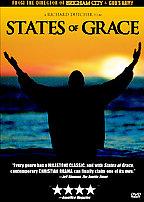 Richard Dutcher with Zions Production has just recently directed an LDS box-office hit, States of Grace. Michael Medved praises the film as “an exceptionally skillful and superbly acted piece of work . . . A VERY MOVING FILM!” Jeff Vice excitedly shouts, “ONE OF THE TOP TEN FILMS OF THE YEAR!” Jeff Shannon of The Seattle Times writes, Every genre has a MILESTONE CLASSIC, and with States of Grace, contemporary CHRISTIAN DRAMA can finally claim one of its own.”
Once again, Richard Dutcher, spending just under a million dollars, crafts for the mainstream public a riveting story, stretching the boundaries of the stereotypical Mormon fanfare. He is a meticulous cinema weaver of Mormon spirituality, taunt emotion, and unsuspecting turns. Dutcher explores the complexity of individual characters, while not in the least bit afraid (at least what I detect) to strip away the sugar-coated, protective layers so obnoxious in most LDS multi-media. A typical Mormon flick might be as fluffy as the foam of a root beer float, but Richard’s stories dare me to ask scores of heart questions. Yet showing restraint, I will only pose a dozen or so.
The young LDS elders in Dutcher’s two films, States of Grace, and his previous movie, God’s Army, live wild adventures in the concrete jungles of L.A., which causes me to wonder what the missionaries assigned to southeastern Idaho or Utah think? Here in Ammon, Idaho, the men walk hum-drum along farm fields and dine atArctic Circle. In nearby Shelley, the men are celebrities at the annual spud fest, battling locals in fun tug-a-wars over a huge, mashed potato pit. Sorry about the lack of Hollywood glamour here in Mormon country. No beaches. No girls in bikinis. No drive by shootings with gang bangers. No unbelievable stories of baptisms in oceans. Just lots of warm, religious fuzzies. LDS concerts. Home evenings. Singles’ wards. And many kind LDS grandpas and grandmas. The biggest challenge for elders in southeastern
Idaho is igniting a new spark among the all too common familiarity. No wonder we normally get the missionaries from far off places. The noticeable social and racial change in the demographics of southeastern Idaho and Utah are the missionaries – a complete dissimilarity to California. (But I will say this about the movie—the people of Ammon, Idaho will like the discussion over Ammon in the Book of Mormon between the actors, “elder Banks” and Carl in the movie. Only “Carl” wouldn’t find many blacks in Ammon, Idaho except theChurch of
God bishop, some of the church family, and a few others.)
States of Grace swirl around two LDS elders—“Lozano”, a tattooed Hispanic, converted from a hard-core gang by an earlier Idaho missionary (Tubbs, I believe) as they lay all busted up in a hospital, and also, “Farrell”, a typical, loveable white boy from Midvale in the Salt Lake area. Three other characters enter the drama to make things distinct and colorful: a homeless, street preacher named Lewis who had disgraced himself because of his “weakness for women”; Holly, a young actress who had wretchedly fallen into some porn auditions to financially survive; and Carl, a big, tough, black gangster, living a life of vengeance through bloodshed.
In typical Dutcher fashion, the suspense takes place immediately, Carl and some of his homies run into the two Mormon boys on a street corner. Religious slurs tumble out – “John the Baptist white boy! Jesus freak!” Things really shutter, spin, and explode out of control when a car loaded with a neighboring gang screeches to a stop in the street. One guy starts unloading full clips of his semi-automatic into the crowd.
This event becomes the salvation of Lozano’s sense of worth in his mission. Missionary discouragement over unfulfilled expectations had him counting the last days for when he was heading home. In front of all his other missionary peers, he wistfully declared his post-mission adventure, “The day after Christmas, I am going to borrow my mother’s car; I am driving out into the desert for two weeks, Dixie Chicks and me . . . rent 42 movies, three for each day . . . stay up till 3:00 in the morning . . . kiss my girlfriend on the lips a 100 times a day, the rest of my life.”
Heart question number 1: Is it religious experience that sustains the heart of a young LDS elder on a mission?
Dutcher introduces the black, homeless man, Lewis, into the movie as a fun-loving, Pentecostal preacher standing on a sidewalk retaining ledge, proclaiming in a loud voice to all the pedestrians walking pass him: “In the beginning God created the heavens and the earth, book of Genesis, chapter 1 verse 1 . . . verse 2, I can tell you all about it brothers and sisters, all about it . . . One Bible, two testaments, 58 books, 11 epistles, and then the glorious book of Revelation, the glorious book of Revelation!”
Things go bad for the fellow. The missionaries find him, terribly sick, lying on some cardboard near a trash dumpster. Farrell would rather leave the guy, but Lozano asks the famed, evangelical question, “What Would Jesus Do?” Like the good Samaritan, he directs his partner, “Grab the feet of this homeless preacher and give him a bed in our room.”
Lozano, Farell, and the neighborhood girl, Holly, end up helping get this guy back up on his feet to the point that when they later fall in moral crises, desperately in need of help, he is the one there for them. Dutcher later films the Pentecostal preacher praying for the LDS missionary, Farell, all torn up emotionally. A matter of fact, as a Baptist minister, I am praying for some of the young, vulnerable LDS missionaries, too. It’s just that I have never seen a Pentecostal preacher dress up in “elder clothes” complete with badge and actually read the Book of Mormon loudly in public places. Have you?
In one night time scene, while Lewis is sleeping in one of the missionary’s beds, Lozano is kneeling in repentant prayer. His buddy asks him what he is doing; and he shoots back, “Don’t die with any sins on your head!”
Heart question number 2: What if this does happen? God does demand perfect righteousness. And remember, every sin is an eternal offence because of the transgression against an eternal, holy God.
Heart question number 3: Are sins just mistakes?
Heart question number 4: Why do people sin?
Heart question number 5: Do sins (even just one) warrant an eternal death?
Carl, in thanks to Lozano for saving his life after the gangster shootout early in the movie, decided to take a Book of Mormon home for some bedtime reading. In fact, he stayed up till 2:30 in the morning. (I confess, I didn’t do that when I first read through the Book of Mormon). So when Carl and the missionaries got together again to discuss his reading, Lozano lightheartedly joked about having to wade through all the THEEs and THOUs, which Farell than piped up with a characteristic-LDS question, “How did it make you feel?” For a minute, I thought I was watching one of those therapeutic talk shows.
Heart question number 6: I am not trying to be belligerent, but is this the question asked often of people after they read the Book of Mormon? I don’t think I have ever asked that of someone in conversation after they read through a book in the Bible. It is usually, What do you think?
Interestingly, Dutcher frames these words for Carl’s response to the missionaries. “You need to get baptized to take away your sins to go to heaven . . . I saw that in your Bible, too. I have never been baptized. Could you do it for me?”
Heart question number 7: Out of the 31,173 verses in the Bible, how many verses would imply that you need to get baptized to take away your sins to go to heaven?
Carl does have one final question before getting baptized, “Can I dance?” Dance?! What a question. Of course, he can dance. Is there any religion in the country that sponsors more dances than the LDS? That night, Carl ends up at a Hawaiian theme, LDS dance party where all the guys can enjoy the kisses of aloha girls and gawk at the Hula dancers. Hey, it is all enough to make him big fella feel right at home.
The movie soon becomes turbulent again. While Carl is joining the LDS church, circled by LDS elders on a Sunday morning, giving him the Holy Spirit, his younger brother, Todd, is surrounded by gangsters in a back alley. The actions are devastating.
Heart question number 8: Where is the authorization in Scripture that young LDS elders can usurp the unique position of the Melchizedek High Priest, the Lord Jesus Christ, and baptize other people with the Holy Spirit (uniting them with the Second Person of the Triune God)?
One night, Holly tearfully confesses (seven and a half minutes of monologue) to Farell about her sordid past and her parents’ complete denial of her existence. She notes about her parents, “I call every Sunday when I know they are at church . . . and tell them that I love them. I have said I am sorry a million times. They haven’t talked to me for two years. It is the hardest around the holidays. They all think I am a big whore.” Farell reassures Holly of God’s love. “It only matters what God thinks. You can’t do any thing that would make Him stop loving you.” But tragically, he ends up later in the movie, succumbing to sexual sin with her, ending his pure, chaste commitment to celibacy required of all two-year missions. Is this a lesson that intimate, religious experience with the opposite sex makes one vulnerable to intimate, erotic experience?
Uh, oh, things are really bad. Farell breaks down emotionally. The movie makes it clear why. The guy has a plaque on his dresser, “Return with Honor.” He has blown it. All he can think about is his father’s words, “I would rather you come back in a casket than in dishonor.” Therefore, hoping to cowardly escape, he tries to end his life.
Heart question number 8– How many young missionaries have committed sexual immorality on their missions?
Heart question number 9 – How many young missionaries have committed suicide?
This is a topic where I am still raw inside. Exactly a year ago, my friend committed suicide here in Idaho Falls. He shot himself. I just ache all over again thinking about it. The only thing that soothes my heart is looking to Christ.
Back to the movie, Holly is the one who shakes Farell from his tormented stupor. She returns her earlier gift to him, a cross necklace, and tenderly shares, “Jesus forgives. There is nothing that He won’t forgive. He loves you just as much as when you were a baby. I don’t know much. But I know that is true. You don’t have to die for your sins. Somebody already did that.”
Heart question number 10 – What do you think about utilizing cross iconography?
Heart question number 11 – More importantly, why did Jesus die for you?
Heart question number 12 – Did Farell in the movie weep and mourn over his immorality because of apparent loss of LDS status or because of the suffering this caused the Saviour? There is a difference between the repentance of King Saul and King David in the Old Testament.
In conclusion, Carl, Lozano, Holly, Farell, and Lewis all finish on their knees before the baby Jesus at an outside live nativity sponsored by the Lutherans. Just in time, Christmas is coming.
My final thoughts on the movie – Grandma Mae won the blue ribbon for the best quote: “A man is never taller than when he is on his knees.” But the widowed preacher’s wife came close in second place with this comment about her deceased husband, “He was a good Baptist.”
Heart question number 13 – What does it take to make a good Baptist?
I couldn’t resist this last question.
 Jesus in Idaho Falls