Uncategorized

Latest LDS volumes engaging John’s Gospel?

I have in my possession, two LDS volumes: The Complete Joseph Smith Translation of the New Testament – A Side-By-Side Comparison With The King James Version (Salt Lake City: Deseret Book, 2005), edited by Thomas A. Wayment and Verse By Verse – The Four Gospels (Salt Lake City: Deseret Book, 2006) by D. Kelly Ogden and Andrew C. Skinner.

As I work my way through John’s Gospel in upcoming months, I will probably reference these two books from time to time.

Is it alright to abbreviate the first book as TCJSToNT? Perhaps there is something better that someone might suggest?

Secondly, are there other contemporary LDS works on John’s Gospel that I need for an accurate LDS perception of the theology in John?

Thinking of heart issues . . .

Neighborhood Survey 1 on John’s Gospel

I don’t have a script, a systematized study, or a research paper to share with the community, only a smile and a book. My heart is aflame over John’s Gospel because of its revelation of a Person. And in these weekly installments of neighborhood surveys, my purpose is to share the input received from neighbors as I explore various details of the fourth Gospel. In these articles, I welcome the clarifications, suggestions, questions, and even strong challenges (really) from those I have talked to and others just reading this entry. (more…)

Family Home Evening

LDS Temple, Idaho Falls
I love living in Idaho Falls. Can there be any better place on God’s green earth? No way in my humble estimation. In fact, this past Sunday, I met a family in church who recently moved here from Florida. In talking with them, my wife said that through an online application and search, Idaho Falls became the number one place in America for this couple to raise their family. Vindication of my home town is sweet!

Well, this Monday night, I relished the time with my family. I have been married to my beautiful wife for almost fifteen years. How she ever saw fit to make me her husband, I don’t know. I didn’t deserve to be the spouse of this gorgeous, bright, cheerful, bi-pedal creature. Thirteen years ago, she graduated as a “top ten scholar of Boise State University.” Back then, I was introduced to the mayor of Boise as the “husband of Kristie”. Today, whenever I visit my wife, an R.N. working once a week at the Eastern Idaho Regional Medical Center, I am still known as just the husband of such a caring nurse. She’s a rare find. I thank God for His providential care in my life. The Lord knew I needed this gal.

We have four children: Elon Joshua (10), Hannah Marie (8), Mariah Noelle (7), and Micaiah Todd (5). Outside of my wife, these four, crafted by the Lord’s power, have become my greatest joy and stewardship.

For Monday evening, we went rollerblading, a bold spontaneous move for a crisp November night. We cruised the greenbelt along the moonlit Snake River, starting from the chiseled mountain man sculpture on Memorial Drive. Our family of six looked like a traveling circus in the evening dark, our shadows and voices bouncing all over between the trees. Crazily whizzing past the war memorial, the fluttering American and POW-MIA flags, and the granite block inscribed with the ten-commandments, we finally reached the gleaming-white LDS temple, stacked seven stories high, Moroni on top facing toward the east.

Having survived our evening at the river (with only one major crash by dad), back home at the kitchen table, we drank big mugs of hot chocolate, topped with piles of mini-marshmallows. And then we discussed Scripture, John 1 to be exact. The insights of little ones are always choice, winning in categories of humor and simplicity.

I love John’s Gospel. Of course, any biblical book that I find myself embroiled in study very soon becomes my all-time favorite book. As the Gospel of John not only provides brilliant stories, one after another, for my little ones, it stretches my mind to the point where I feel like I am drowning in the deepness of its ocean swell as I seek to trace the footsteps of God.

Thank the Lord for the freedoms we still have in America to enjoy such Family Home Evenings.

Which brings me in conclusion to share an exciting idea, I want to spark discussion about John’s Gospel in as many homes as I can in Ammon, Idaho. In fact, tomorrow, I will share my first weekly installment of “Neighborhood Survey over John’s Gospel” with many more yet to come, Lord willing. Here are the first two questions I have been asking the neighbors: 1. Is it “Bethabara” or “Bethany” in John 1:28? 2. In John 1:9, does “Lamb of God” mean Jesus as a lamb sacrificed as a substitute for the penalty of our sins or does the title speak more of His meek and gentle nature?

Thinking of heart issues for LDS . . .

The Doctrine of Atonement

Since no one in the world of bloggernacle is defending the penal-substitutionary atonement of Christ, I thought I would pull out an old sheet given to me by a systematic theology professor in seminary.

This past month, Jacob, at the “New Cool Thang” listed a series of questions that every atonement theory needs to answer.

First, tell me what you think about these eight propositional truths:

1. God is angry with man because of sin.

Rom. 1:18, Psalm 5:5-6, Psalm 11:5, Jer. 12:8, Eph. 5:6

2. God took the initiative in providing salvation for man.

II Cor. 5:19

3. God provided an atonement because He loved mankind.

John 3:16, Rom. 5:8, I John 4:10

4. The atonement is a ransom.

Matt. 20:28

5. Christ delivered us from the power of Satan.

Heb. 2:14

6. Christ suffered vicariously.

II Cor. 5:21, Isa. 53

7. Christ’s work satisfied God’s justice completely.

Rom. 3:26

8. Christ’s active obedience (His life) is part of this atonement. (He kept the law for us.)

Phil. 2:8, Rom. 5:19, Rom. 8:3-4

Secondly, don’t you think these five English words are important for the discussion: 1. satisfaction, 2. atonement, 3. propitiation, 4. reconciliation, and 5. expiation. What do they mean as you wrestle with this all important doctrine?

Thirdly, maybe we should go even a little deeper . . . what inspired Hebrew and Greek words are important to define as you give definite answers for why you don’t like the penal-substitutionary atonement?

Being versus Becoming

Before I begin delving into this topic, let me first clearly communicate that one of Scriptures’ greatest truths to me personally is “union with Christ” (see Ephesians). To strip away this truth is to bar me from my greatest treasure. Apart from Christ, I am nothing. Only as I am “in the Lord” does my life have any temporal meaning and then stretching into eternity, any real significance. In fact, I become invincible, relying upon Him. The Lord is my panoplia (full armor), rendering ineffective any methodeias

(wiles) of Satan.

But saying that, I will never be like Christ in the fullness that He is. Whereas, I need daily augmentation of His fullness, Christ never did and never will need the creaturely process. Of course, atheists mock the idea of a mysterious Triune God beyond the grasp of mankind’s intellect. Here is a textbook case, Richard Dawkins’ God Delusion (2006). He writes, “Rivers of medieval ink, not to mention blood, have been squandered over the ‘mystery’ of the Trinity, and in supressing deviation such as the Arian heresy. Arius of Alexandria, in the fourth century AD, denied that Jesus was consubstantial (i.e. of the same substance or essence) with God. What on earth could that possibly mean, you are probably asking? Substance? What ‘substance’? What exactly do you mean by ‘essence’? ‘Very little’ seems the only reasonable reply” (p. 33) . . . “Most of my readers will have been reared in one or another of today’s three ‘great’ monotheistic religions (four if you count Mormonism), all of which trace themselves back to the mythological patriarch Abraham . . . ” (p. 36). “Thomas Jefferson, as so often, got it right when he said, ‘Ridicule is the only weapon which can be used against unintelligible propositions. Ideas must be distinct before reason can act upon them; and no man ever had a distinct idea of the trinity. It is mere Abracadabra of the mountebanks calling themselves the priests of Jesus’ ” (p. 34).

Surely, I can’t wrap my limited intellect around all the pregnant monosyllables bursting with meaning in John 1; but that doesn’t mean I can just simply erase them from the pages of Scripture. They stand yet for the marveling, intellectual gaze of all.

The first chapter of John contrasts in vivid, full color two people, the Christos (Jesus) and the forerunner (John) who came in the spirit of Elias. If we don’t understand this foundational distinction between the two in John 1, the rest of the book and quotes appearing in any other text will be altered in interpretation.

John 1:29 is a staggering job description for a man. Can John fulfill this? Absolutely not. He explains the difference between Jesus and him. “This is he of whom I said, After me cometh a man which is preferred before me: for he was before me” (John 1:30).

Wait a minute. Have we heard that before? Yes. Back in verse 27, and also a third time in verse 15. Did we catch this? When the Spirit of God has the author write something three times within the space of sixteen verses, we need to halt our rushed reading, camp out, and meditate. This is something big . . . one of those fundamental truths about God.

John was naturally born into this world, so was Jesus (six months later). But though the Logos has always existed, John hasn’t. And this is where the preference to Jesus is clear–Jesus, always being in contrast to John, becoming. The only time we see Jesus becoming, is when He became flesh. Don’t you see that contrast between those Greek verbs?

John, the greatest man ever born to a woman up to that point (Matthew 11:11) saw the huge chasm between himself and Jesus at the baptismal event, the Lord’s Messianic annointing (Isa. 61:1). And it is the heart attitude of any transformed creature in the process of becoming to be forever positioned just like the mighty forerunner, John the Baptist before the Christ, who is the eternal being. We are not even worthy to unloose the straps of His sandals. This truth is immutable.

I am well aware that Scripture does not contain any words like hypostases, persona, homoousios, or Trinitas. So I carry no passion for a discourse in Greek metaphysics. My heart’s desire is one of an onward, upward move for discussions in soteriology (the doctrine of salvation), but the truths of John 1:29 are inseparable connected with something even greater, the nature of Jesus and how John contrasts himself with the Christ. Friends, are we seeing, eye to eye, over what is written in John 1, the very first chapter, reminiscent of Genesis 1.

Your thoughts?

The Ezekiel sticks of chapter 37 – Deja vu!

I remember almost 20 years ago when the LDS seminary would have a designated missionary week at Skyline High School in Idaho Falls, Idaho. My good buddies would always give me a marked up, color-coded Book of Mormon. Often, they would have personally penned letters in the front or back cover.

One of those particular days after school, a basketball teammate, a great friend, called me up in order to sincerely share his testimony. And then he began talking about the two sticks. Before I knew it, his big brother jumped on the phone, referencing me to an obscure passage that I really had no clue about in high school, Ezekiel 37:15-19.

If you were to ask me last year what I knew of Ezekiel, I still wouldn’t have much of a clue. I was a complete major-prophet-Ezekiel illiterate. But this all changed as I began this year to personally study Ezekiel, line upon line, precept upon precept, tracing particular Hebrew expressions in all their vivid context month after month. The unfolding story is one of the most riveting, wild, mind-boggling, gut-wrenching, and heart-rejoicing books that I have ever read, scrutinized, and prayed over. And the journey is still not over. I begin chapter 40 this Wednesday night. I would love for any of you to join me in the study. Are there any other words written 2500 years ago that are packed with such relevance for today? Have you checked out those prophecies yet to be fulfilled?

Dennis L. Largey recently wrote in the Sperry Symposium Classics: The New Testament (2006), “Ezekiel prophesied that the stick of Judah and the stick of Joseph are to become one (see Ezekiel 37:15-19). We have seen them become one under one cover in our editions of the scriptures. The challenge now is to use them as one” (p. 65).

My first reply is “Deja vu.” My second reply is more of a plethora of questions that tumble forth as I live alongside you all in the LDS corridor. 1. Is this the standard interpretation of the Church, today? The true, official, exegetical stance? 2. Does this reflect normal, literal, historical, grammatical hermeneutics? 3. Is Largey’s interpretation giving priority to the overall message of Ezekiel? 4. Aren’t there any objective, Scriptural data right within chapter 37 that provides a contrary interpretation to Largey on Ezekiel’s powerful prophecy enactment?

Thinking of heart issues . . .

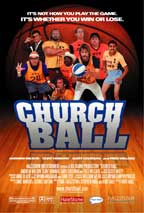
Church Ball

church-ball-1.jpg

Who living in Southeastern Idaho or Utah has never experienced church ball? Clear back as a teenager, I use to connect with friends; and we would battle it out at one of the local ward gyms, bones crushing against bones, sweat flying everywhere, chests heaving from full exertion. During these moments of nostalgia, I recall those events of bygone days as fantastic. With the delusion of age, I only remember my LDS friends and me as the invincible team from Glory Road.

But even now as a dad with four kids of my own, my spine still tingles with excitement when I step onto the hardwood floor of a ward gym. Now it is my ten-year old who diligently practices with other boys in hopes of being the mighty Hoosiers.

With all my background of being on a church gym floor, I rented the DVD, Church Ball. It might be a surprise to some but I have enjoyed some of the LDS flicks. They don’t carry the smut of Hollywood, like brutal and gory violence, crude sexual content, nudity, explicit sexual situations, crude language, cursing, strong profanity, graphic vulgarity, explicit drug use, and every other kind of foul nuance that can be dreamed up under the sun.

And hooray for those who designed ClearPlay!

But the humor of Church Ball seemed bizarre, extremely out of character for the LDS film industry. The script of this film tried to achieve the famed corkiness of Napoleon Dynamite but failed because of the flippancy over spiritual concepts. But maybe that was the whole point – frontload the presentation of religion with satire. That sounds like Hollywood.

I don’t think a movie like this helps LDS or evangelicals among pockets of community in Southeastern Idaho that are completely skeptical of religion.

Yet despite the movie, you can still pass me one of those basketballs dubbed with the title. I am ready to play.

Rick Davis, blacks, Rexburg (nation’s most conservative region)

John Miller did a short story in today’s Post Register in Idaho Falls on BYU prof, Rick Davis. Here are a few highlights.

“An eastern Idaho history professor who appears to link what he described as his region’s low welfare recipient rate with the fact that ‘we don’t have blacks in this area to speak of’ is drawing irate reactions . . .

‘Rexburg Mormons’–‘so red that you bleed,’ Davis said – ‘aren’t to be confused with Boston Mormons,’ his description of Church of Jesus Christ of Latter-day Saints members from outside the Rocky Mountain West who may be more liberal. Rexburg’s population has ‘a very high education level . . . a very high income level,’ Davis told salon.com.

‘That equates with being conservatives,’ he said. ‘We’re fiscally aware of where the money comes from, and that it is doesn’t grow on the great tree in Washington. We don’t have any welfare state in this area at all. We don’t have blacks in this area to speak of. We’ve had them, and they’ve come and gone. Not to say they were driven out; they’ve just felt uncomfortable because there aren’t enough of them — like you and me moving to Montgomery, Ala.’ ”

Now, guys, I love Rexburg. Do you know where I took my wife on our last wedding anniversary? We stayed overnight in Rexburg, Idaho at one of the new motels! Had some good food in a new restaurant. And I like going to BYU-Idaho concerts. (I know, some of you Boston Mormons are thinking this guy is really lame.) But how am I suppose to get my black buddies over here to Eastern Idaho and do some skiing at Targhee (of all things) when Rick is cracking comments like this?